
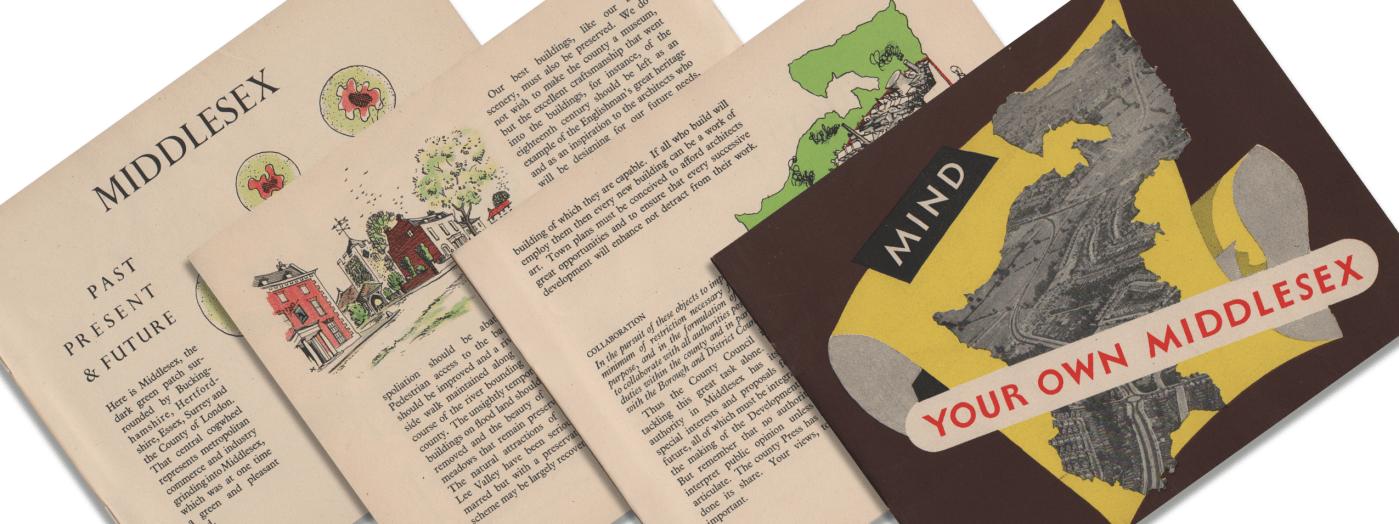
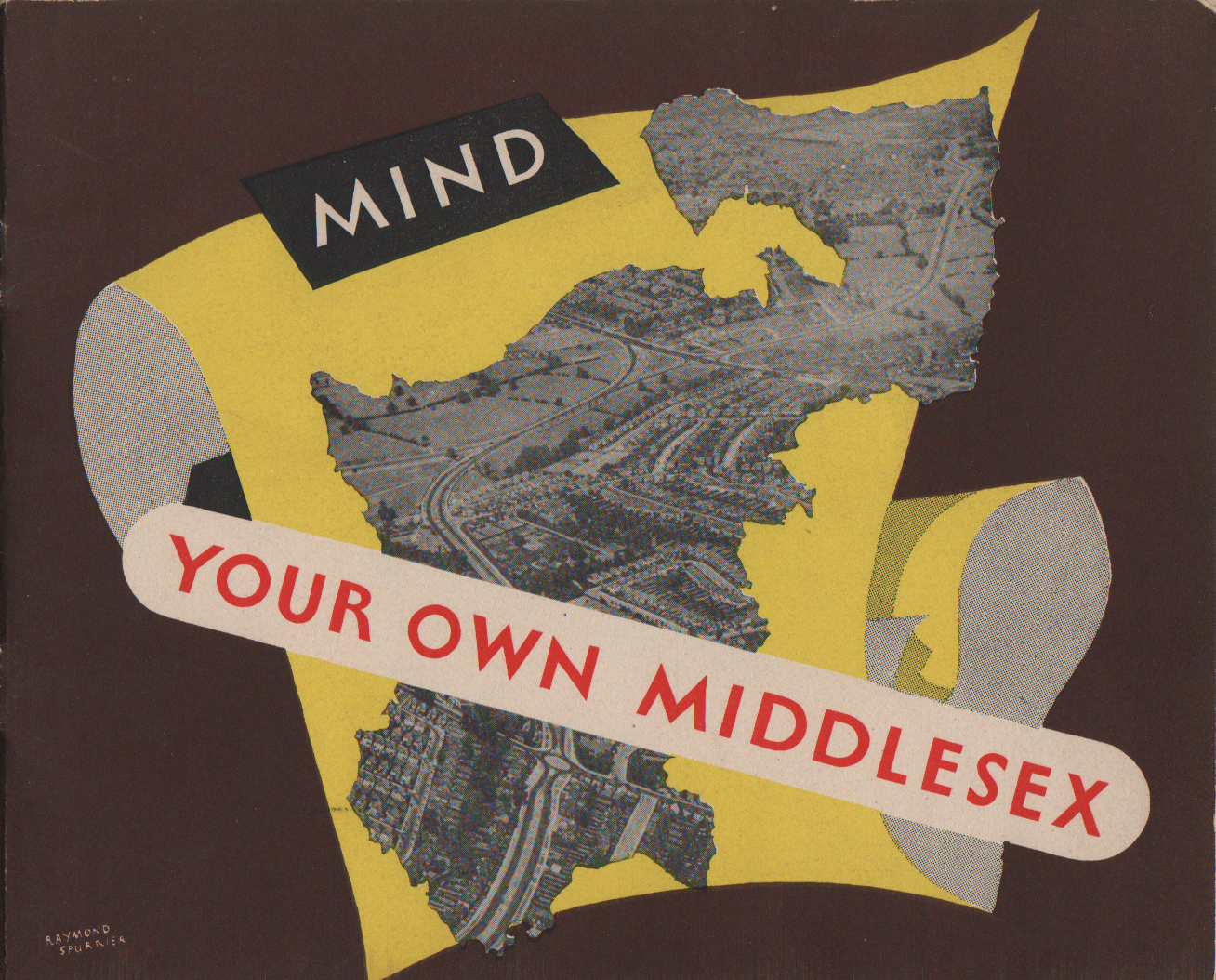
Let me introduce you to a wonderful little planning consultation document from the late 1940s called “Mind Your Own Middlesex”. But first…
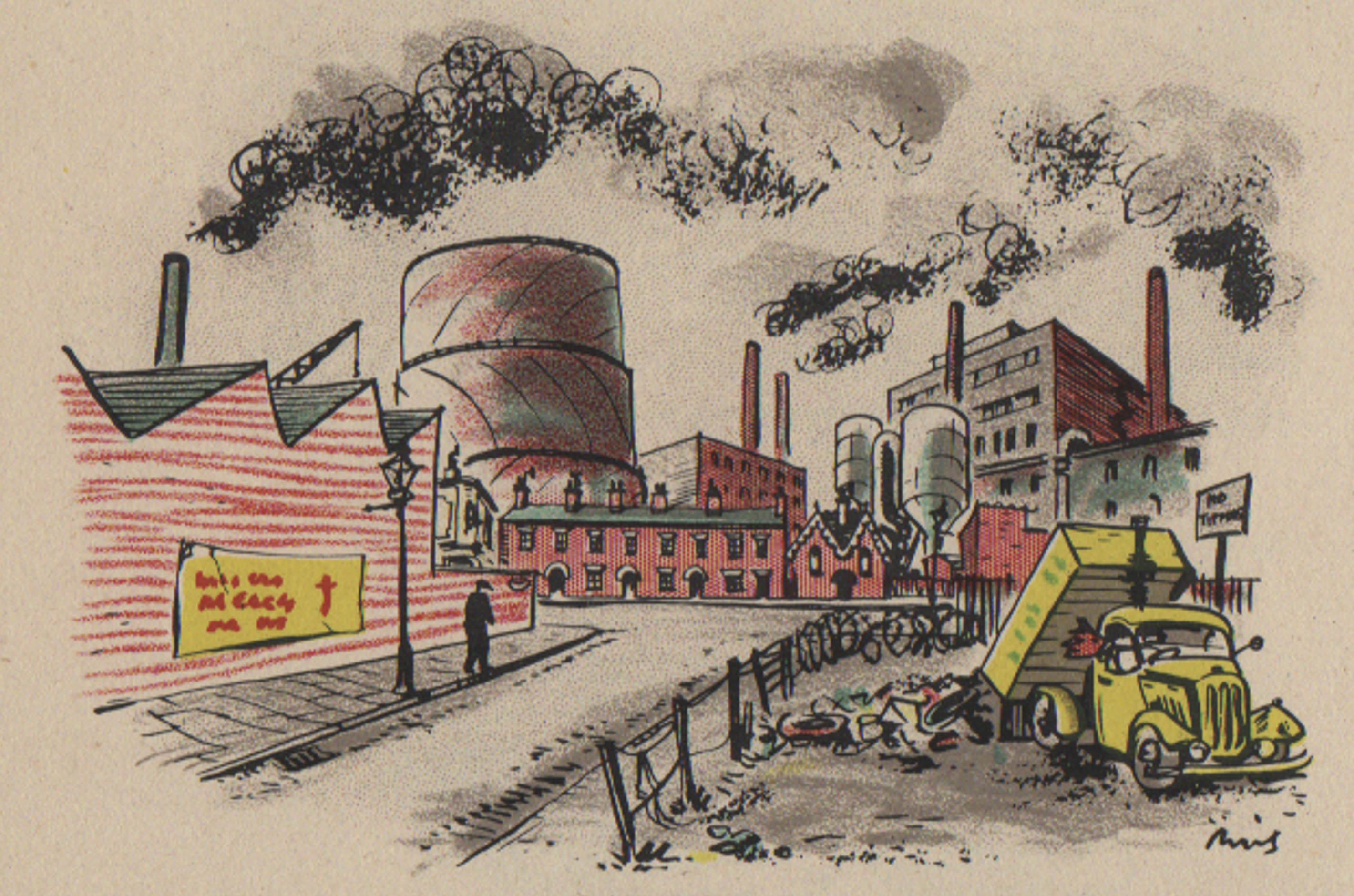
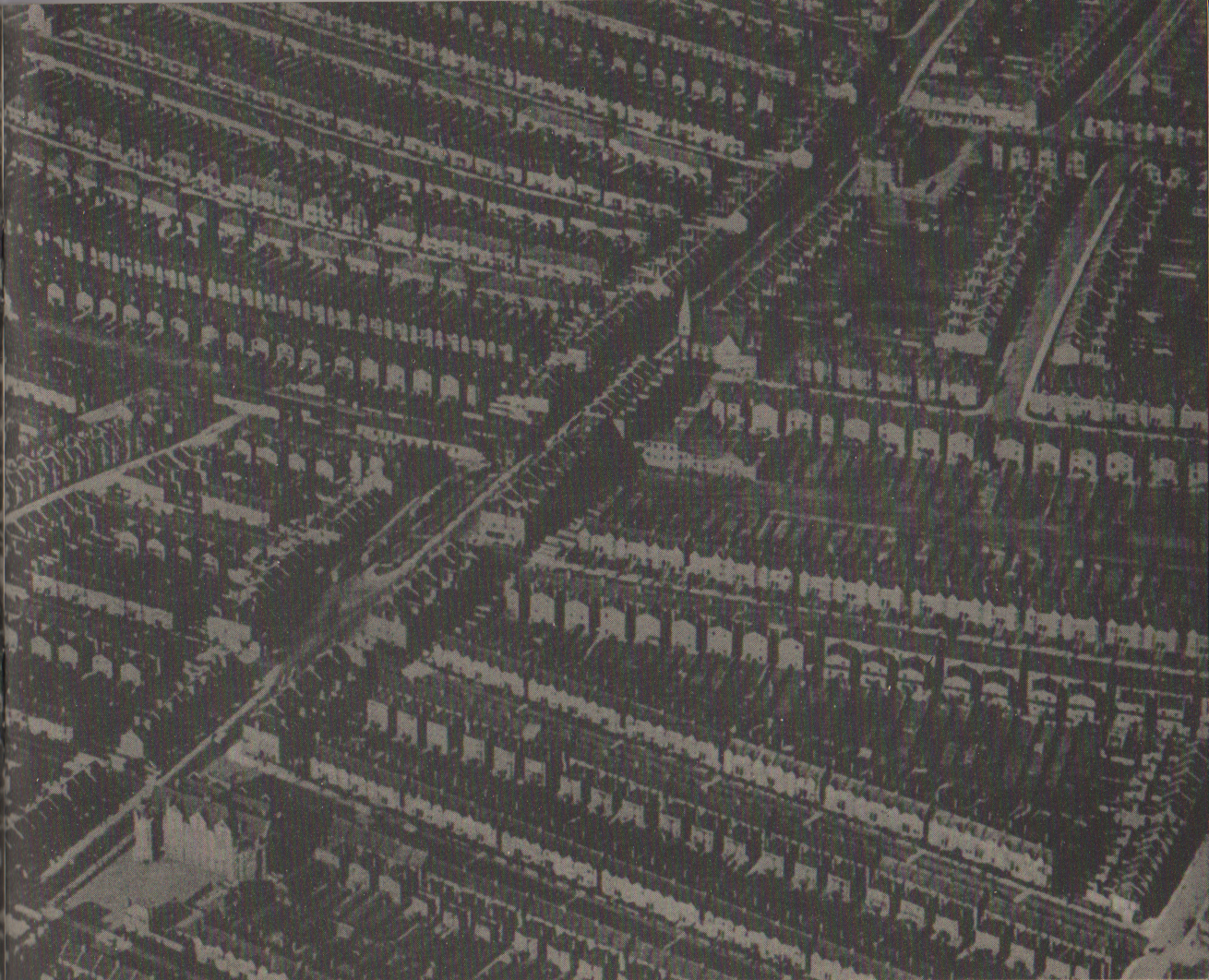
Middlesex. Like many childhood first impressions of unfamiliar places, my formative experiences of Middlesex came from looking out of the car window. And those impressions were disproportionately influenced by two regular(ish) routes: flogging across Twickenham and Hounslow to visit relatives in Southall or stop-starting round the North Circular to pick up the M1. The leafier parts of Metroland never registered, nor did the Victorian terraces of Hornsey. Middlesex was, in my mind’s eye, a grey place of clogged arterial roads, suburban pebble-dash, serried rows of concrete lampposts [1] and low rise industrial units. Of course, I loved it!
Then there was the question of what exactly was Middlesex? Some time in the very late 1970s, I recall my dad trying to explain to me that although we wrote it on envelopes addressed to various family members, Middlesex hadn’t actually existed as an administrative county since 1965. I have a later recollection of celebrity astrologer Russell Grant demanding the County’s return from his spot on the Breakfast Time sofa. This was enough to trigger some deep fascination with an enigma that had once been a definite thing, and now either wasn’t (the administrative county), or still was (the historical county), depending on your conceptualisation of Middlesex.
Historically, county government had rested with the justices of the peace. Boards of guardians took on responsibility for the “care” of the poor, with various other boards set up to cover matters such as highways, health and education. In the case of Middlesex, a large part of its pre-1889 territory was covered by the Metropolitan Board of Works, charged with developing much of London’s urban infrastructure.
By and large, the Local Government Act of 1888 created elected county council government at the level of the historical counties and it is at this point that Middlesex County Council was formed. However, as the Council’s 1965 valedictory publication notes: “[the passing of the 1888 Act] foreshadowed the ultimate fate of Middlesex, transferring the bulk of its rateable wealth and population to the new County of London” [2]. The rateable value (the value of property upon which local taxation could be levied) of the “old Middlesex” had been £22.4m in 1889, of which £19.4m transferred to the new County of London [3].
What was the point of Middlesex County Council?
Should the administrative county of Middlesex have existed at all, given this less than promising start?
The changes of 1889 had provided an opportunity for major reform and could have dealt with the issue of Middlesex there and then when the strains were first showing. But in choosing to confine the County of London to the same geographic footprint as the predecessor Metropolitan Board of Works, the new London County Council’s boundary reflected the London of 1855 (when the Board had been set up), not 1889. As extensions of the existing urban area, a case could have been made for including the Middlesex towns of Ealing, Acton, Willesden, Finchley, Hornsey and Tottenham within the new County of London, but that would have left Middlesex with virtually no rateable value at all and just a swathe of pleasant countryside on London’s western and northern borders.
Further, a degree of foresight might have anticipated that even this pleasant countryside would in time become swallowed up in London’s urban sprawl, given how the metropolis had expanded to date. Perhaps, on a purely rational basis, all of Middlesex could have become part of London in 1889?
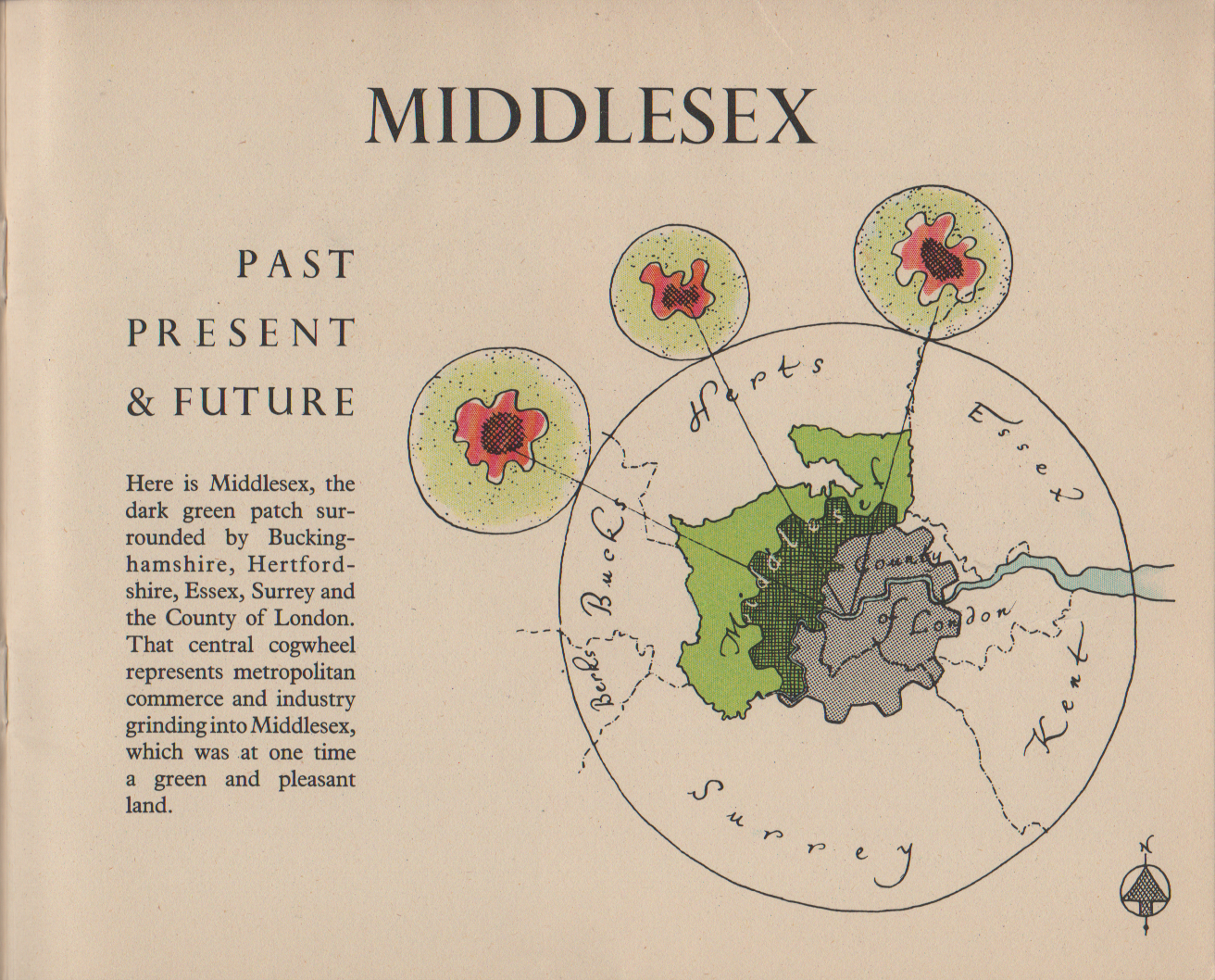
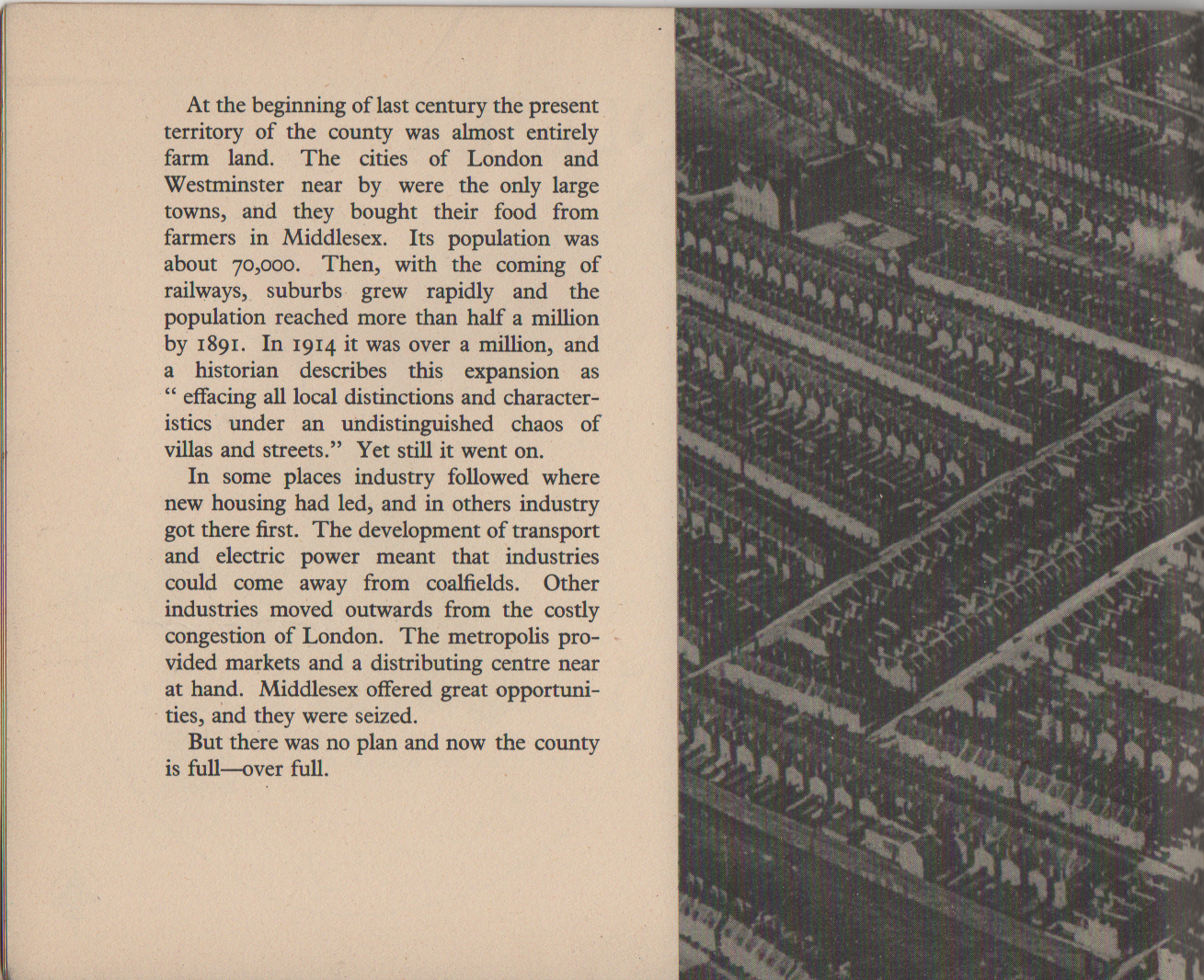
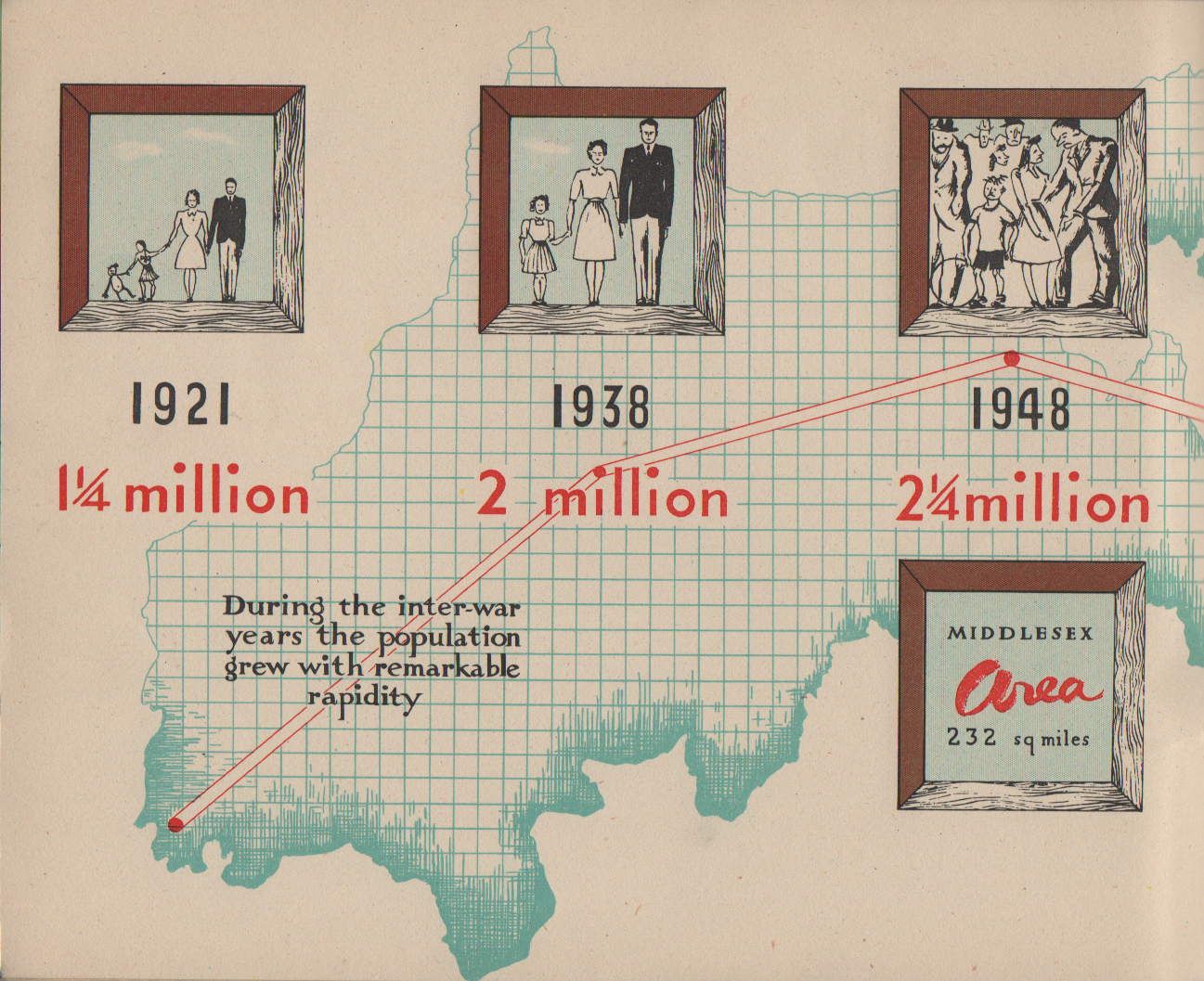
In short, a tension around Middlesex County Council’s purpose and sustainability was there from the beginning. That it survived for 76 years until 1965 probably reflects a number of factors: (i) general inertia and unwillingness among national legislators to revisit the administrative boundary question notwithstanding major expansion in the London metropolitan area; (ii) the growth of London’s suburbia which engulfed Middlesex – a need for some form of county-level government was required as Middlesex’s population grew from c.543k in 1889 to c.2.3 million in 1951 [4] with an attendant increase in rateable value; (iii) the successive transfer in of functions to give the Council “critical mass”, including Education and Welfare, although Hospitals were lost to the newly formed National Health Service in 1948; and (iv) the tenacity of the Council itself.
In his angry, but always entertaining, 1939 book The Government and Misgovernment of London, Professor William Robson of the LSE was characteristically brutal:
“Take the County of Middlesex, for example. What conceivable justification can it have as an area of local government within the metropolis? It is utterly meaningless from every point of view.” [5]
He went on:
“…Middlesex remains an anachronism in the body politic of London government. And the paradox is that the more able and energetic the County Council of Middlesex becomes, the more anachronistic its area grows”. [6]
I am intrigued by how “able and energetic” the County Council was in its final few decades as it battled away in lively fashion on a number of fronts. First, it fought to maintain its independence from London, even though the reality was that it was now a major part of the capital city geographically, if not administratively. Second, and not unrelated, was the growing local authority infrastructure of its Borough and Urban District Councils which demanded greater delegated powers – the large Boroughs such as Ealing were able to make a strong case for autonomous County Borough status in light of their size, but a moratorium was in place on such developments for fear of fatally undermining the County Council. Indeed, in their History of Local Government in the Twentieth Century, Bryan Keith-Lucas and Peter Richards note that when the 1958 Royal Commission into London Government was taking soundings:
“Much of the evidence of Middlesex County Council was devoted to polemics against the larger boroughs in the County”. [7]
Enter the Planners
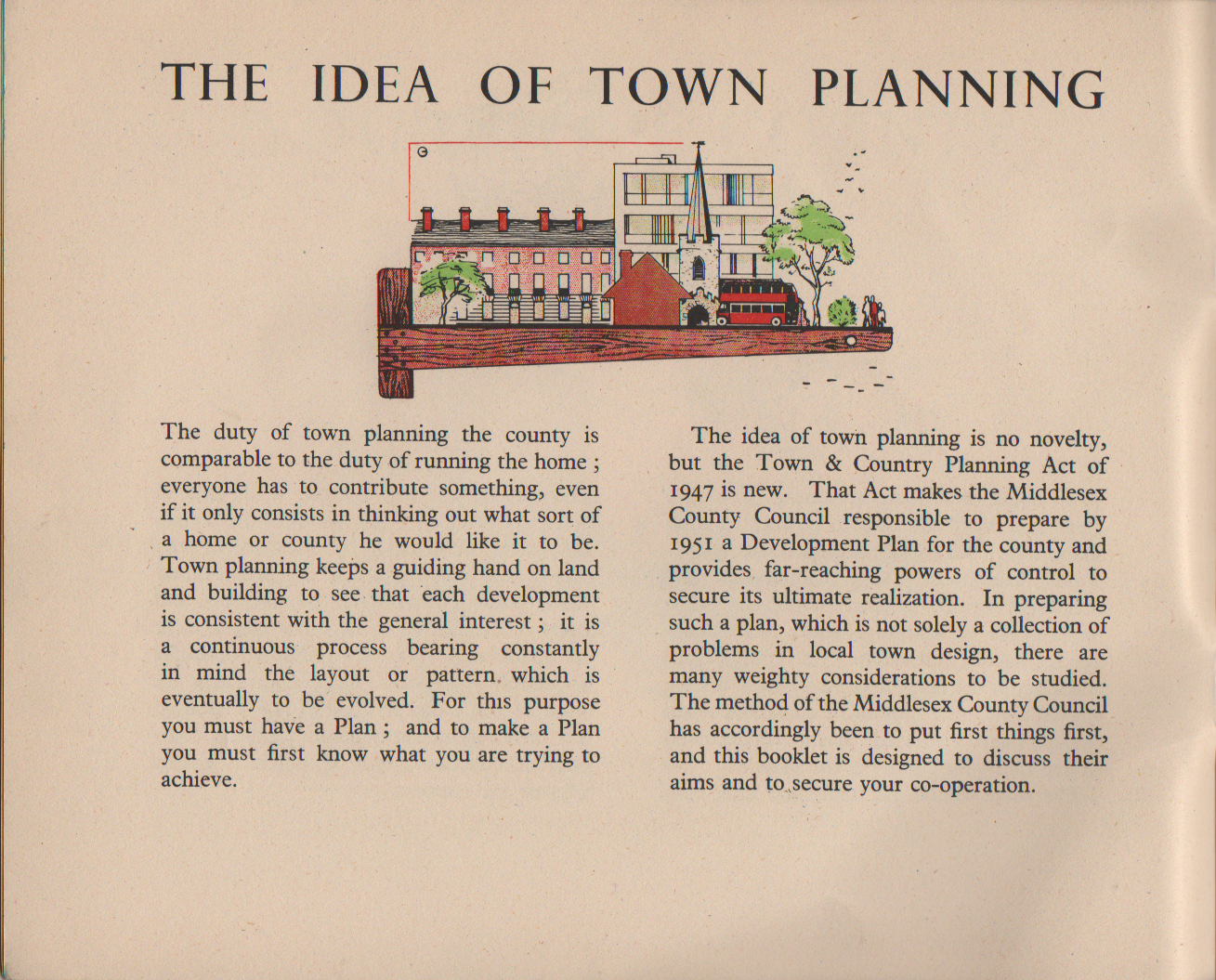
One area where the Council’s energy was particularly evident in the latter stages of its existence was in planning. The Town and Country Planning Act of 1947 required Middlesex to present a Development Plan by 1951. In so doing, powers were taken away from the Boroughs, a small victory for Middlesex (and I have written elsewhere about the magnificent Willesden Survey which had seen the Municipal Borough of Willesden embark on a short-lived planning journey with gusto).
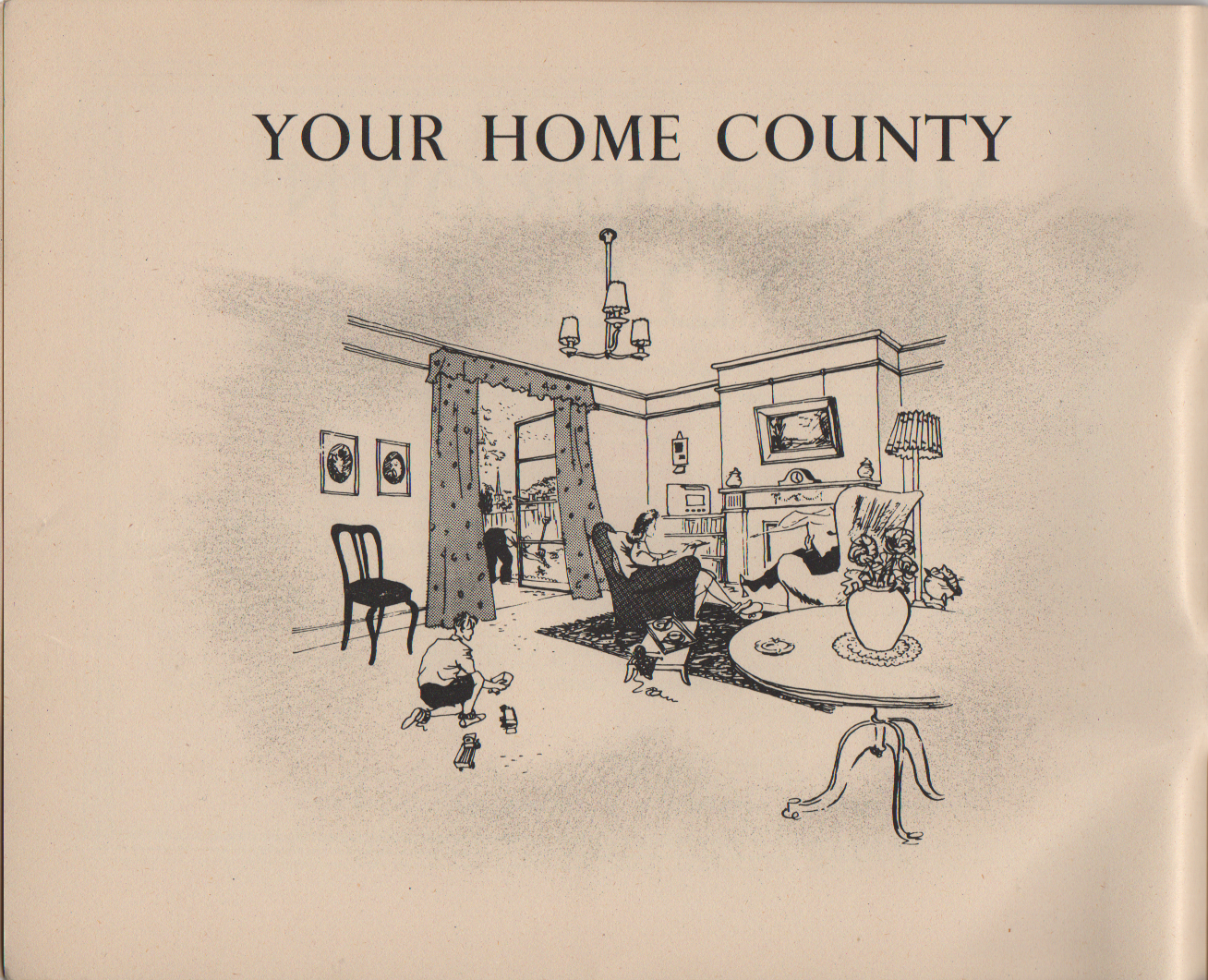
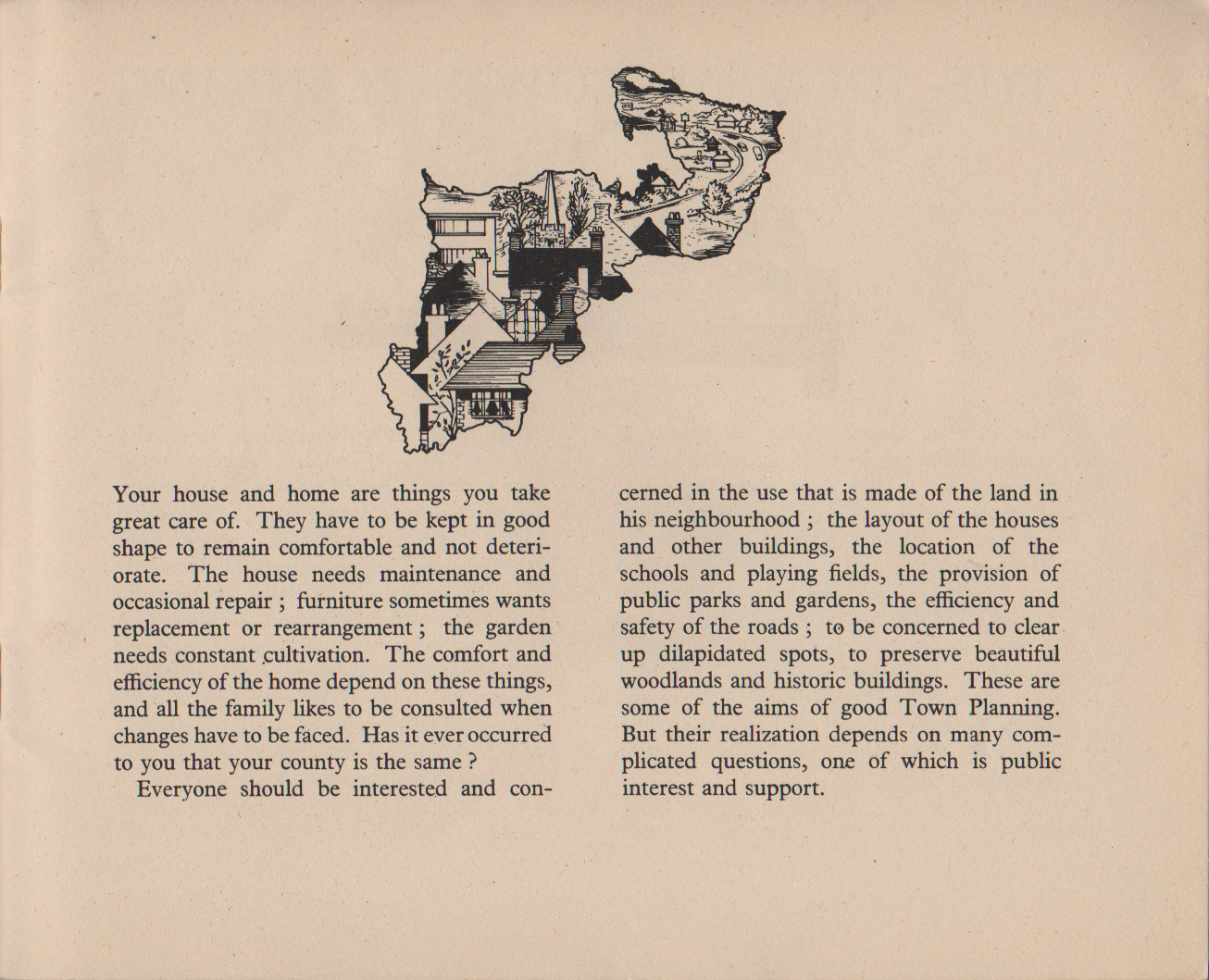
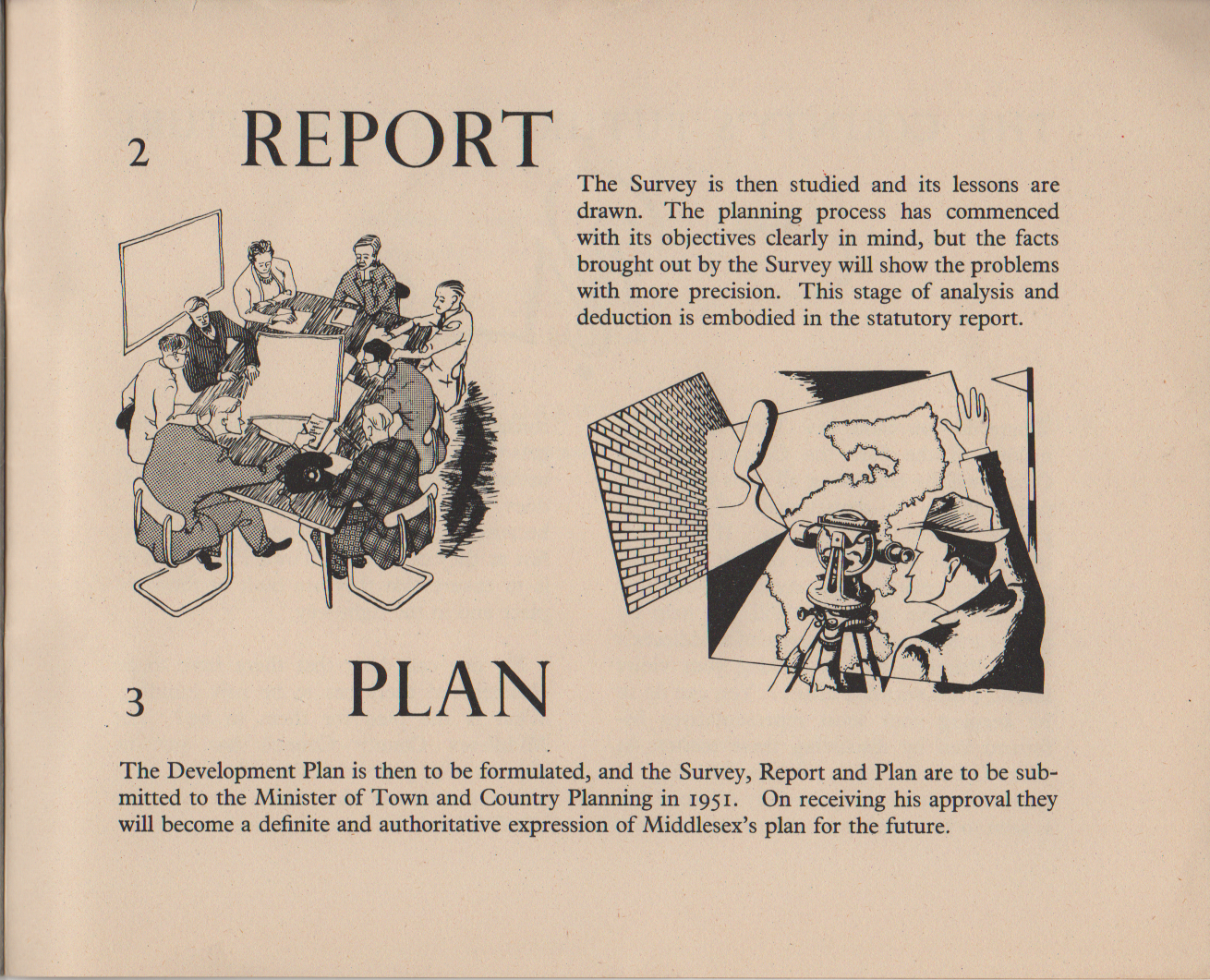
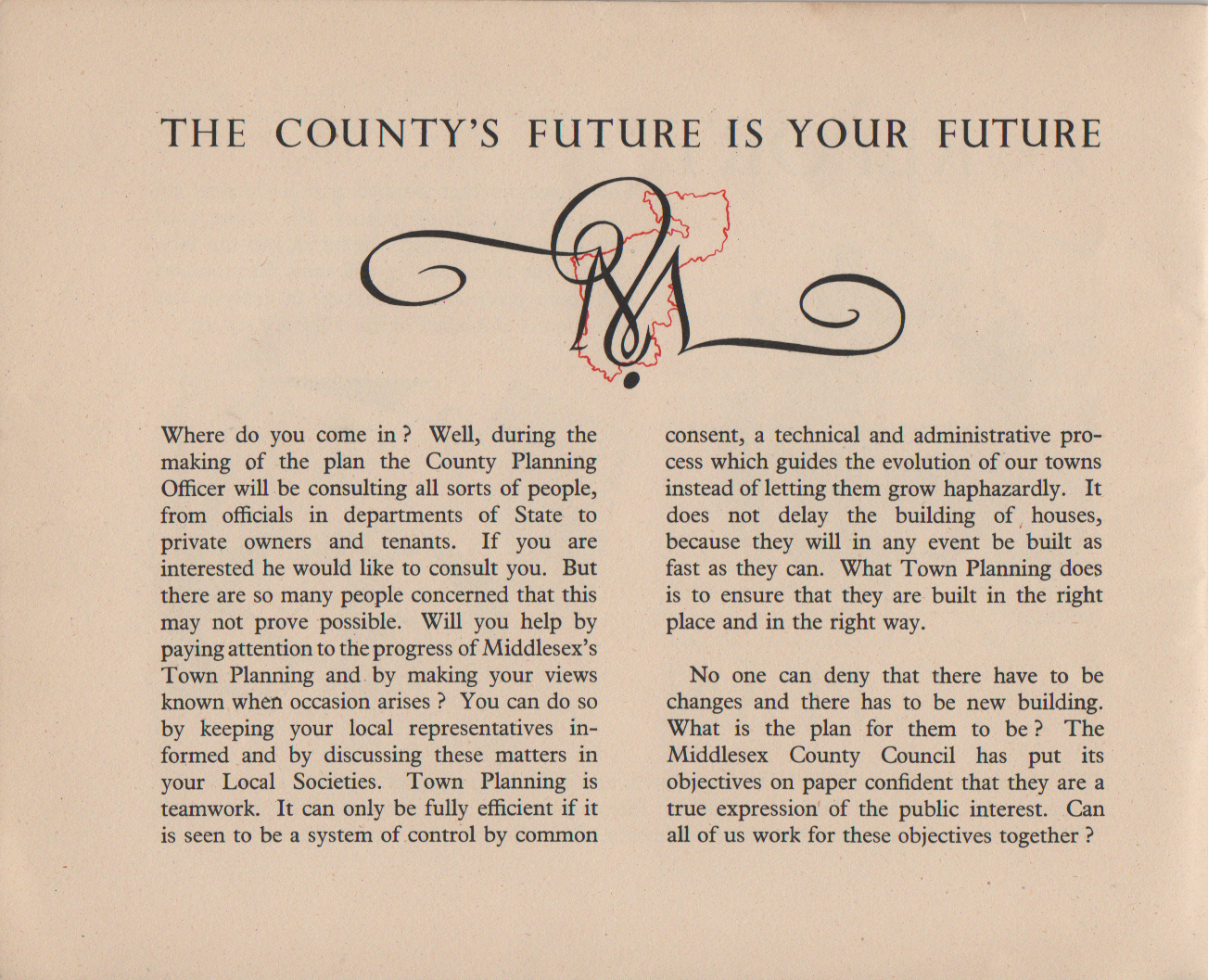
If post-war planning was a burgeoning industry, then so too was the new art of public relations and the two combined together to give us the document that is at the heart of this particular post. The Middlesex Development Plan would require a degree of consultation with the County’s citizens and in anticipation of this, a lovely little book, Mind Your Own Middlesex, was produced. I started LCC Municipal to document and share Greater London’s municipal design, communication and ephemera, and this is a classic example.
An odd title though, as on an emotional level we tend to regard “mind your own business” as an instruction to disengage rather than actively participate. But logically, I guess it works – the future of Middlesex was the business of its citizens and it was business that needed urgently minding.
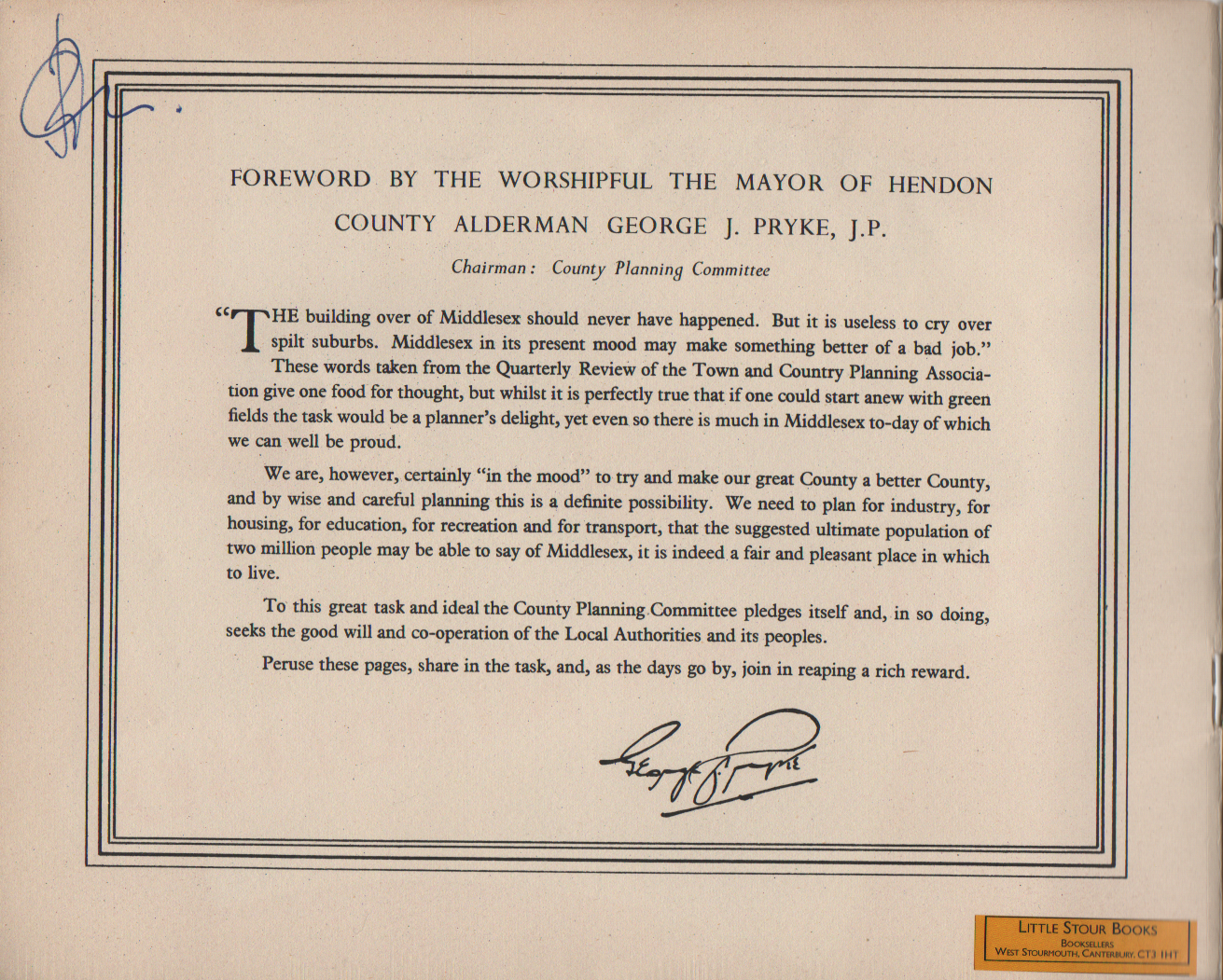
In his introduction, the Chair of the County Planning Committee, Alderman George Pryke (who also happened to be Mayor of Hendon) summed up the problem perfectly when he quoted from the Quarterly Review of the Town and Country Planning Association:
“The building over of Middlesex should never have happened. But it is useless to cry over spilt suburbs. Middlesex in its present mood may make something better of a bad job” [8]
And Mind Your Own Middlesex was a call to action to take part in making that bad job better. As Pryke urged:
“Peruse these pages, share in the task, and, as the days go by, join in reaping a rich reward”. [9]
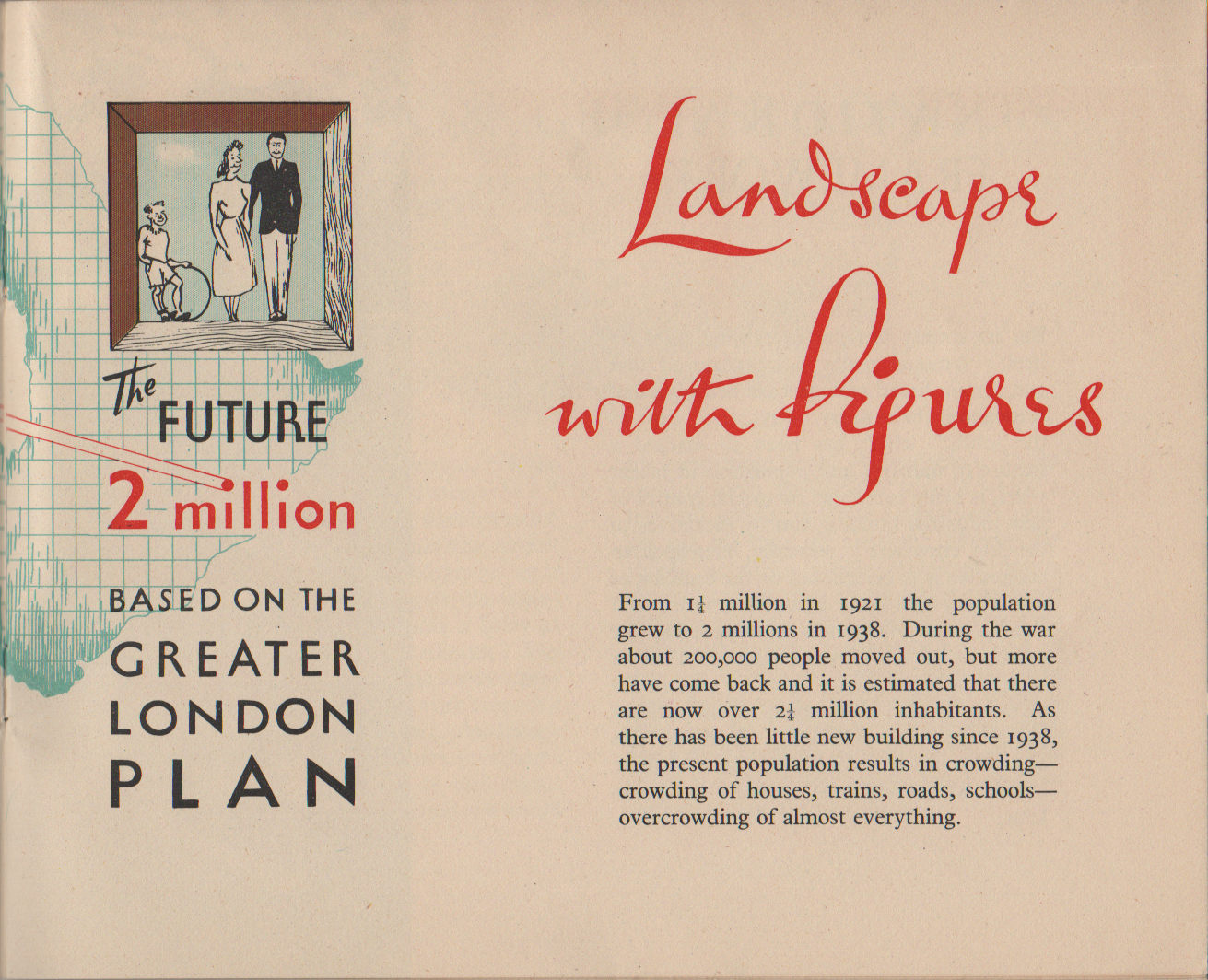
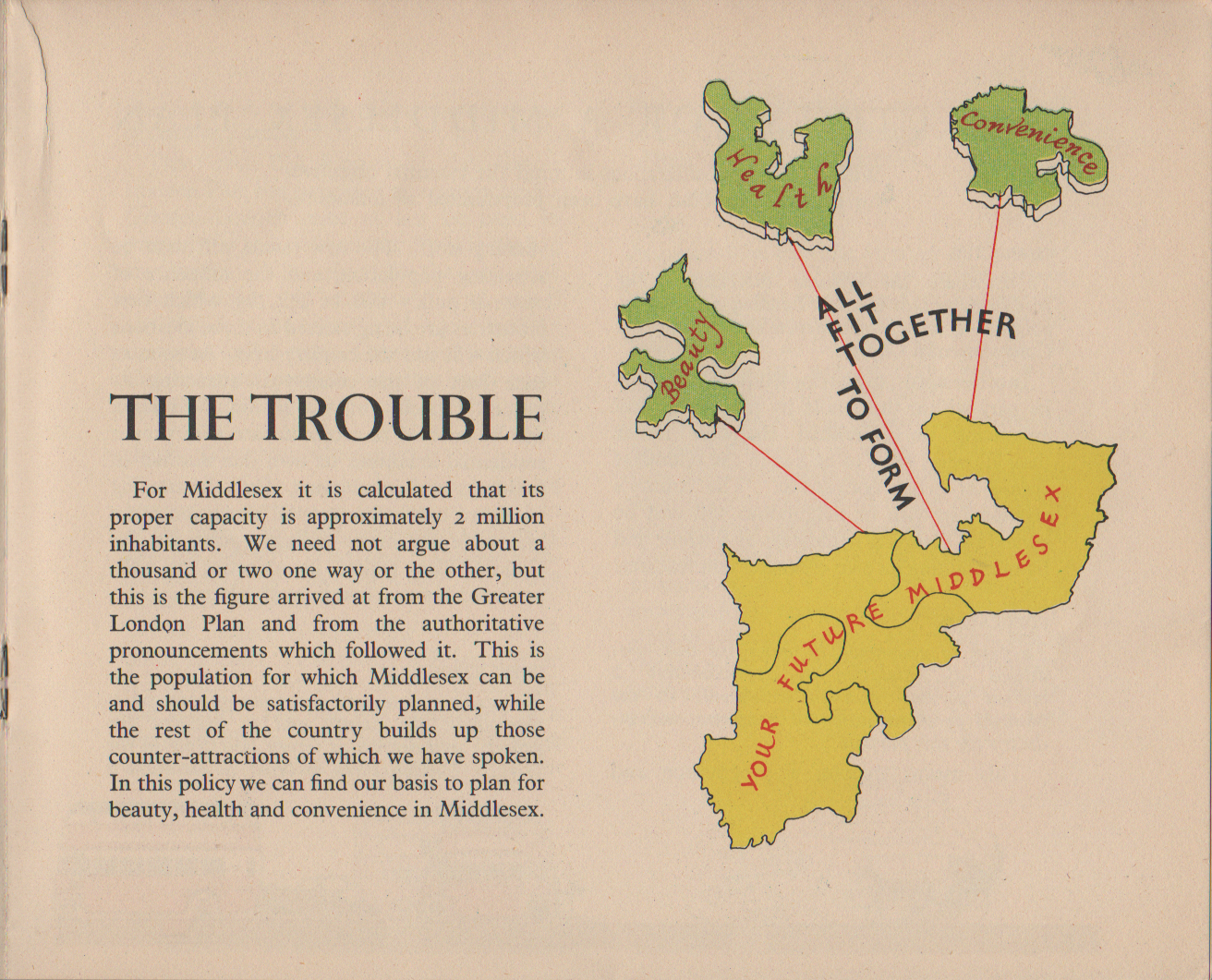
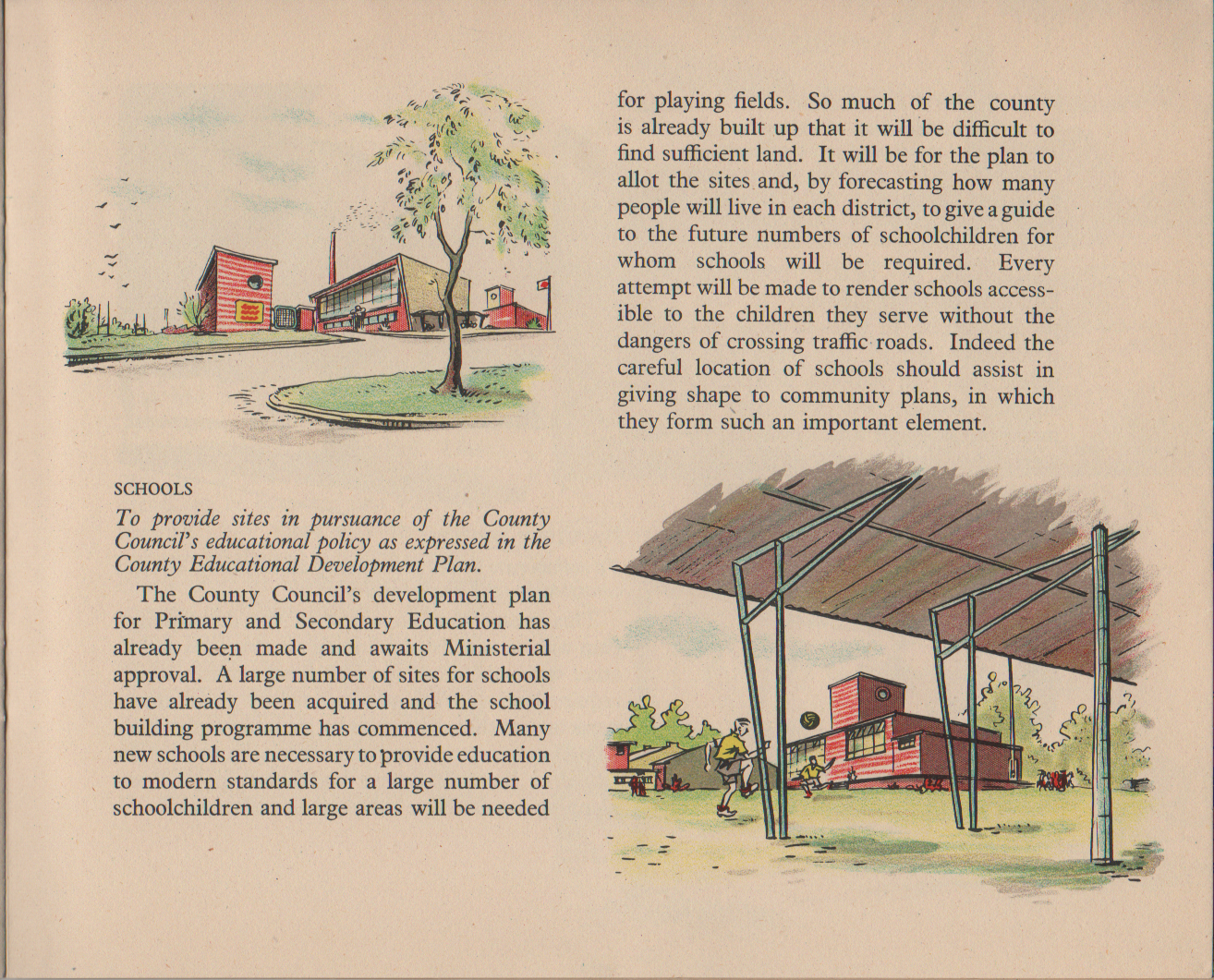
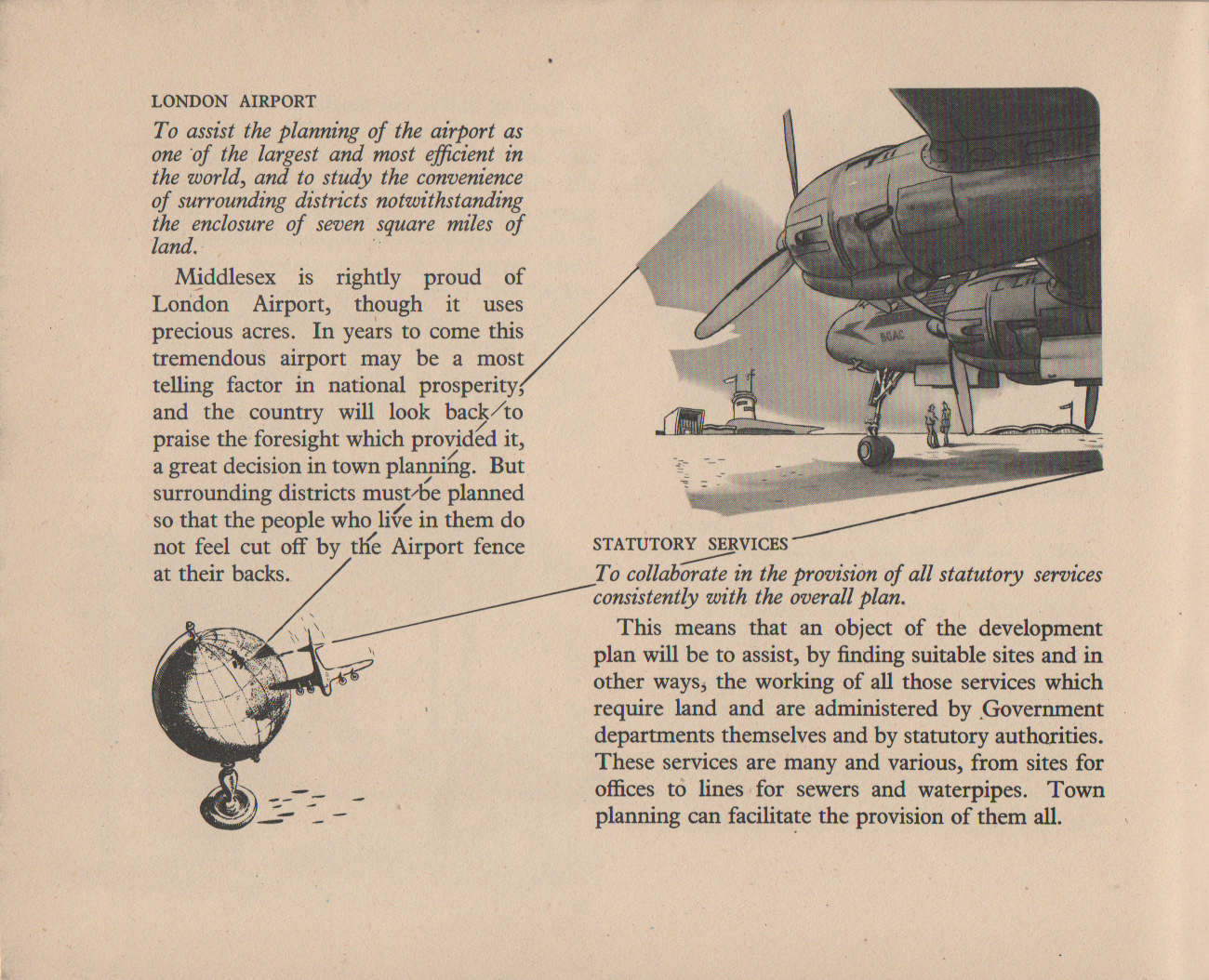
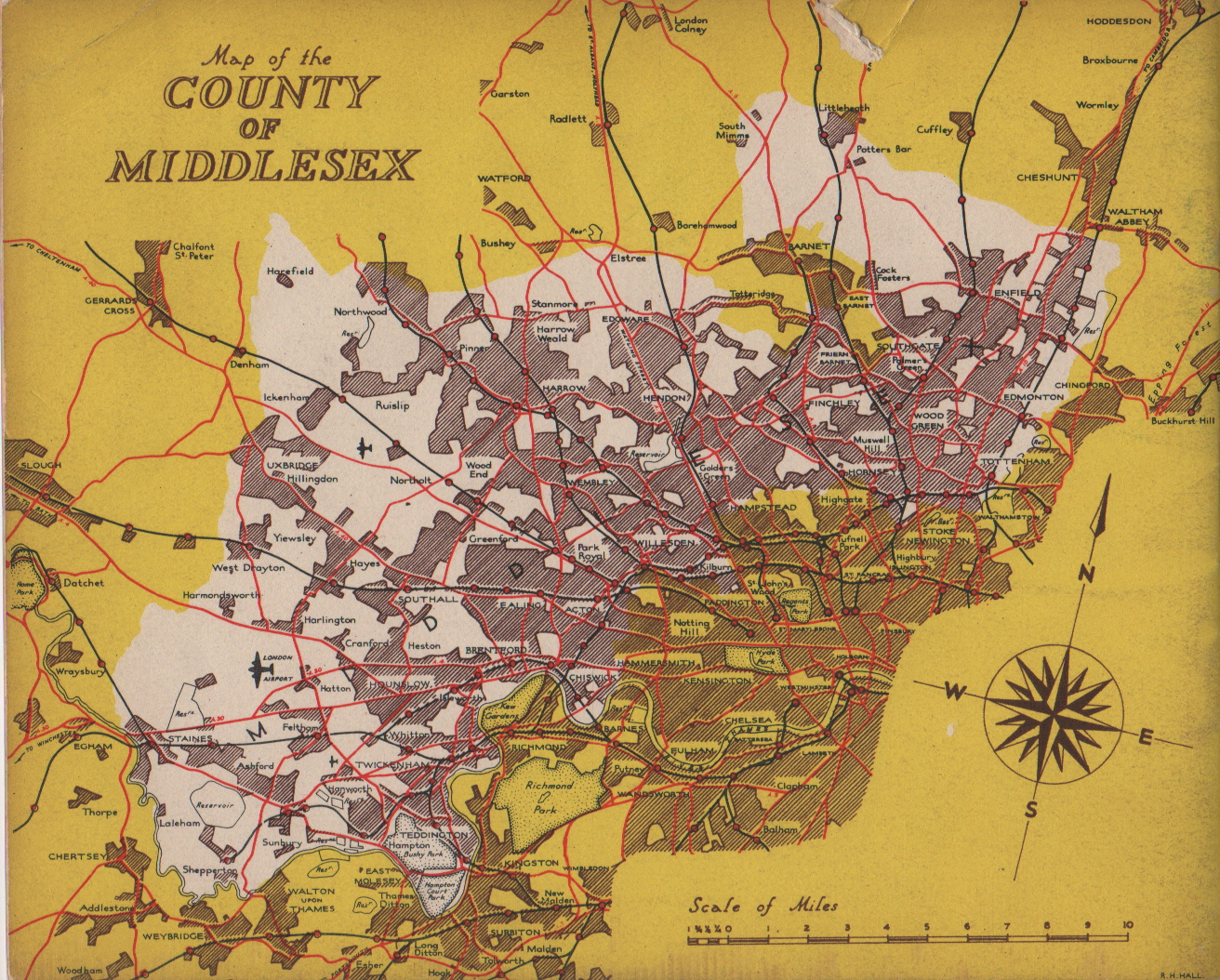
As would be expected of a Development Plan, the primary concerns were optimising the population size (considered to be 2 million ideally), balancing land use between competing priorities, securing provision of open spaces, and the development of key social infrastructure including roads, schools, industry and commerce. Specific to the Middlesex plan was its part in the development of Heathrow airport, which was set for major expansion.
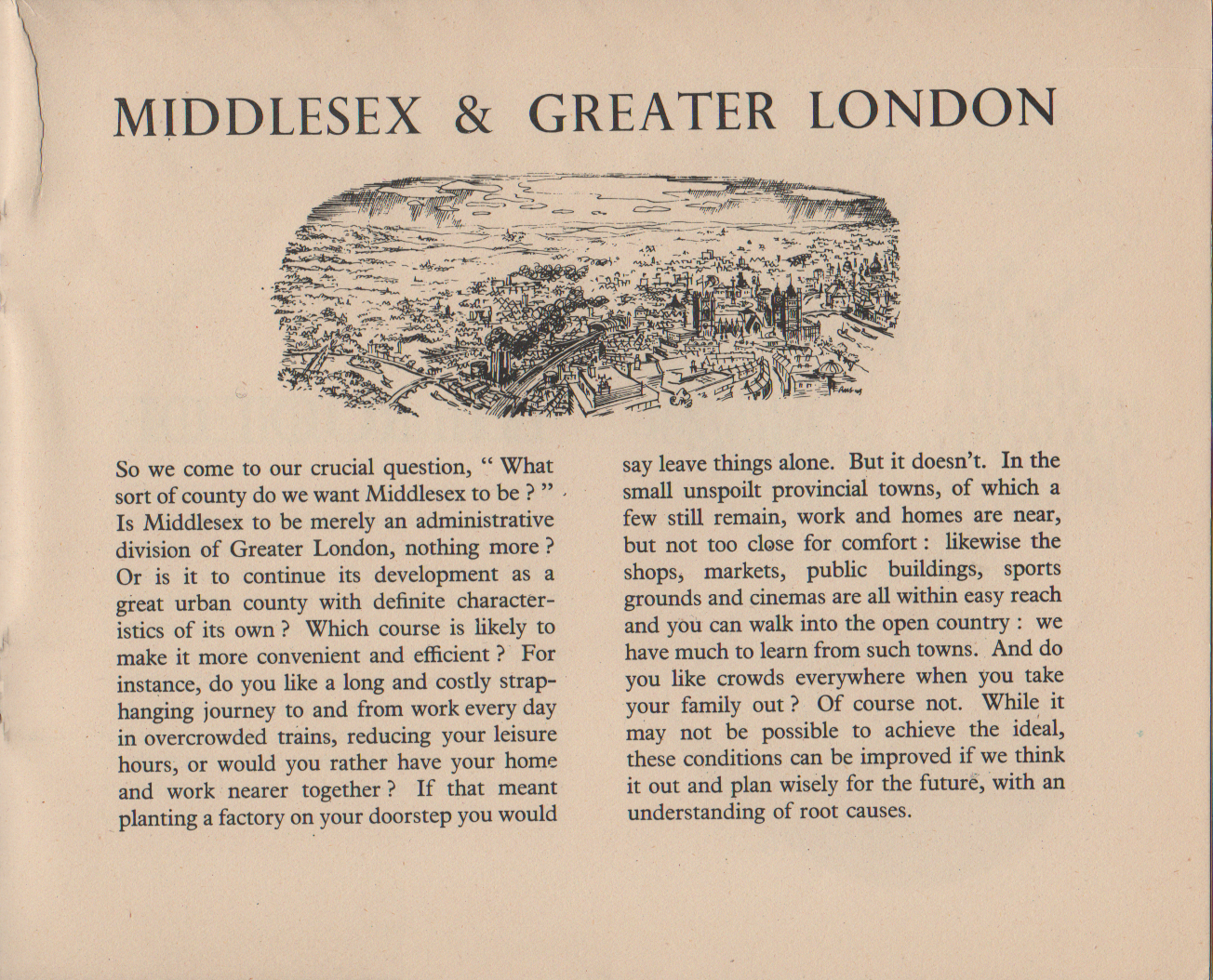
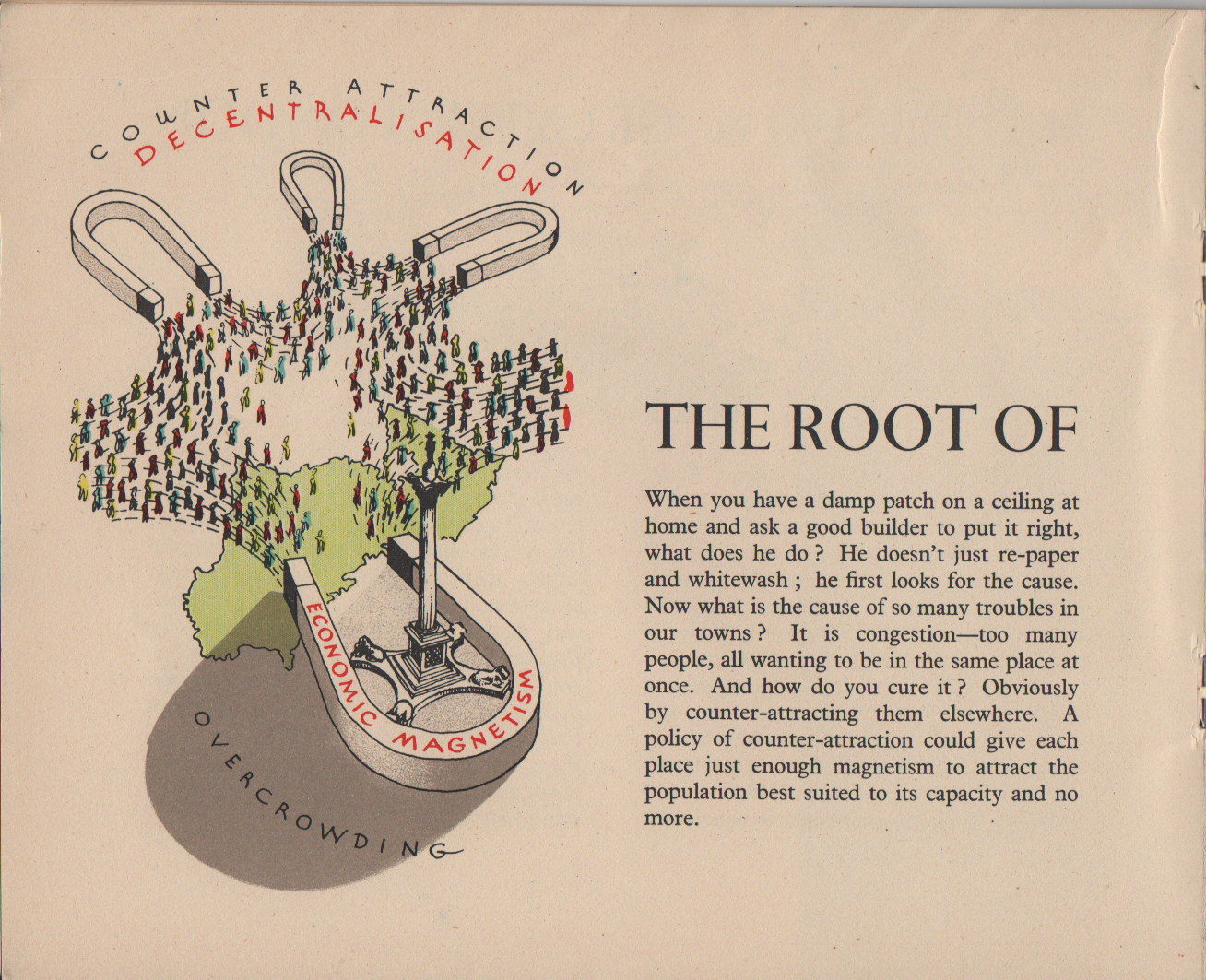
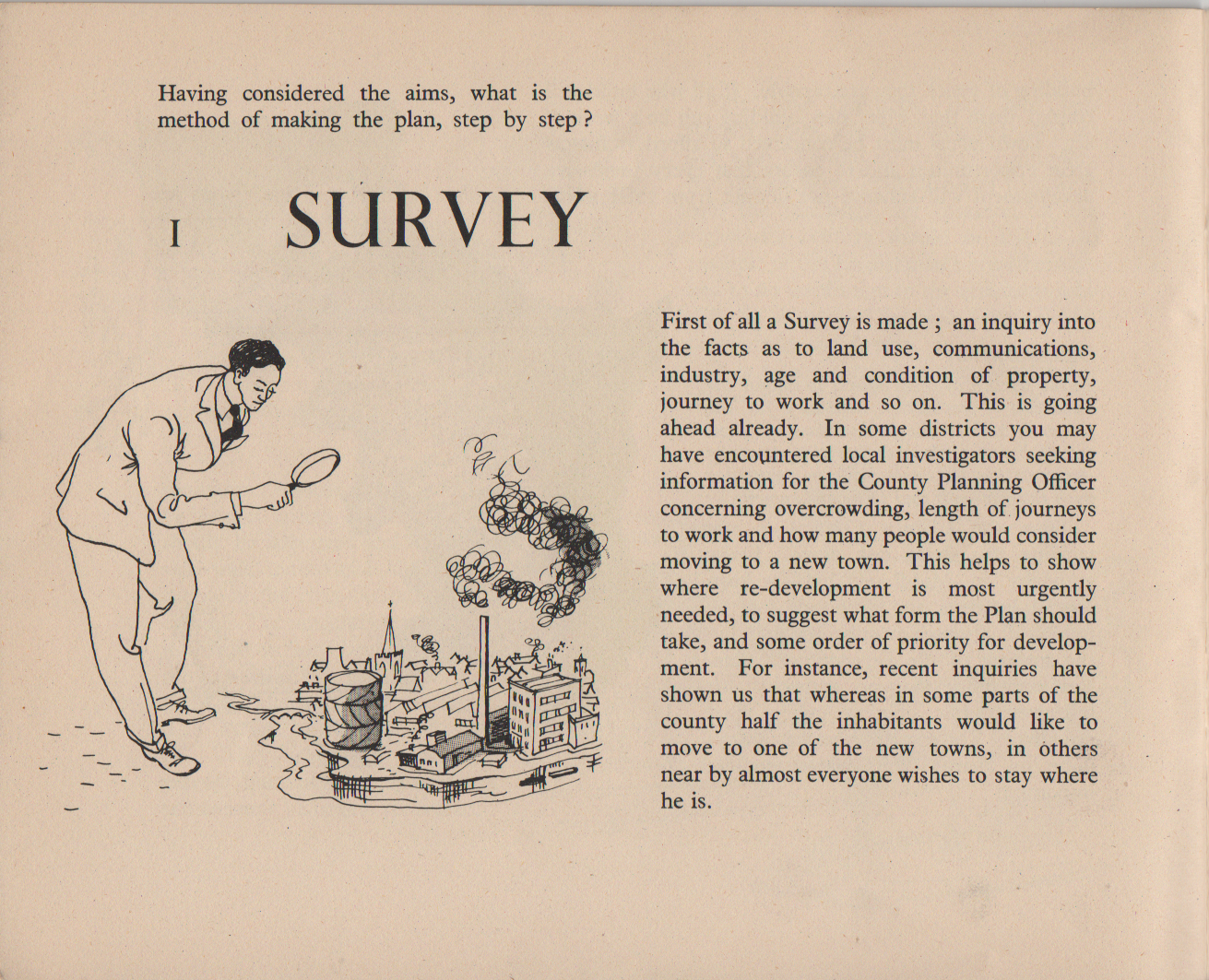
I have presented the whole document below so you can see how The Council sought to engage the public. I love Raymond Spurrier’s illustrations throughout, and the clean and clear design of the pages. The tone of the narrative can be a touch condescending – officialdom trying to explain concepts to the “little people” (and mostly assumed to be men), but, in my view at least, it still manages to distil the essence of the whole planning exercise into an easily digestible form.
The County Development Plan would ultimately be approved by the Minister of Housing and Local Government in 1956 and the formal Review of the Plan was placed before the Minister in 1964. No sooner had the Plan been finalised than the whole question of London local government began to be addressed in earnest. While Middlesex County Council had eight or so years to work with an approved Plan, the complex issues that it was grappling with would ultimately be the Greater London Council’s headache from 1965.
I will finish by returning to the Council’s 1965 farewell publication and its summary of the achievement of its Planning Department:
“under its planning policies, the County Council arranged for hundreds of trees to be planted near main thoroughfares and has acquired about fifty wrongly-sited premises in order to extinguish their industrial user” [10], which all feels rather modest in the end.
![OBJECTIVES FOR A MIDDLESEX PLAN With all these considerations in mind the essential objectives for a Middlesex Plan have been propounded as follows :- CHARACTER To cultivate the efficient individuality of Middlesex within Greater London, as a metro- politan county inter-dependent with the Commonwealth Capital. In other words, to plan for Middlesex to play its part within the whole by preserving and enhancing its individual character rather than allowing itself to be lost in the relentless spread of urban congestion. The county's relationship with its neighbours will best be served by planning Middlesex as a whole and by maintaining its own character and features. POPULATION To plan to accommodate under the best con- ditions a population of approximately 2 million persons, and to collaborate in the planned decentralisation of residence and in- dustry for this purpose. This means making a programme and sticking to it. The new towns will soon be attracting population, and the influence of national policy will be felt, by which new industries are being steered to those locations which will suit the country best. As soon as each part of the country is attracting its proper capacity of population Middlesex will be enabled to accommodate with proper residential amenities its own due number of buildings and inhabitants. Only by ceasing to regard continuous overall expansion as an inevitable and never-ending process can the County Plan realize its objective of well- provided homes close to work-places. OPEN SPACE To secure a systematic provision of open spaces throughout the county and to preserve the general area defined as Green Belt Ring in the Greater London Plan, in order to maintain a [continues on next image]](https://lccmunicipal.com/wp-content/uploads/2026/04/myom48-016.png)
![[continued from previous image] final barrier to the northern and western spread of Greater London. The Green Belt Ring which the Greater London Plan has suggested as a perimeter for Greater London must at last be fixed to prevent the acres of building from spreading any further. The spread in the past took place gradually and relentlessly ; but now if any plan is to be effective we must decide a limit and call a halt. Then, also, inside the ring we must provide ourselves with parks and playing fields within reach of every home. SOCIAL AND ECONOMIC BALANCE To study and promote a careful balance between the varieties of land use in each part of the county, to avoid undue specialisation of land use over large areas, and to strengthen the individuality of the townships of which Middlesex is composed. This balance is something to be always borne in mind. How dreary it is when there is a great area with only one type of building and activity. The best way of avoiding such monotony is to focus social and economic life around well-built town centres, and to aim that each neighbourhood or township shall so far as appropriate contain a wide diversity of business and social interests. ROADS In consultation with the Ministry of Transport to accommodate all necessary radial arteries which cross the county, and to improve the county road system on the basis that if vehicular traffic increases at the same rate as in the ten years before the war, it will rather more than double itself in twenty years. The demands made on our road system by the sudden increase of traffic in this century have been truly enormous ; and it has too often been a question of trying to catch up with insistent demands rather than of being able to provide for them in advance. The preparation of a County Plan gives a new opportunity to recognize precisely what net- work of roads the county will require, and to reserve sites for the new roads, widenings, junctions and bridges that will eventually be necessary. Then if the land is thus kept [continued on next image]](https://lccmunicipal.com/wp-content/uploads/2026/04/myom48-017.png)
![[Continued from previous image] ready to hand, construction can be under- taken as and when the occasion arises. INDUSTRY AND COMMERCE To accommodate only a volume of industry and commerce appropriate to a population of about 2 million persons and to the county's inter- dependence with London, and to encourage those projects of industry and commerce which prove to have the best cause for being sited within Greater London. Everyone is profoundly agreed that Middlesex must keep its own industries as active as ever ; and this it can help to do by the careful planning of every change. But it is henceforth the wrong place for entirely additional new factories, and the precise volume of employment appropriate to the county must be worked out in relation to the size of its population. Moreover, the kind of business and industrial activity best suited to the area is likely to be that which needs to be near the capital; such as head offices and depots, central stores, warehouses and establishments which can only maintain efficiency close to the Port of London or the London market, and generally executive and managerial offices of nationwide undertakings.](https://lccmunicipal.com/wp-content/uploads/2026/04/myom48-018.png)
![GENERAL To safeguard and develop the amenities of the county by preservation of its best natural and architectural features, and to plan the exploitation of its natural resources, such as sand and gravel, in the public interest ; in particular to secure the reconditioning of gravel pits for suitable after-use. As to the county's natural resources it turns out that sand and gravel deposits are even more important than had previously been supposed. The reserves of the nation have proved to be none too plentiful. This calls for a plan so that sand and gravel can be extracted first wherever possible. Nor must excavated land in future be allowed to remain derelict; efforts must be made to secure new sources of filling material and the filling must be properly carried out so that when the pits have been filled in, the land, instead of being valueless to the community, is available for agriculture or development. Outstanding among natural features is the Thames Riverside, where [continued on next image]](https://lccmunicipal.com/wp-content/uploads/2026/04/myom48-021.png)
![[continued from previous image] spoliation should be abated. Pedestrian access to the banks should be improved and a river- side walk maintained along the course of the river bounding the county. The unsightly temporary buildings on flood land should be removed and the beauty of the meadows that remain preserved. The natural attractions of the Lee Valley have been seriously marred but with a preservation scheme may be largely recovered. Our best buildings, like our best scenery, must also be preserved. We do not wish to make the county a museum, but the excellent craftsmanship that went into the buildings, for instance, of the eighteenth century should be left as an example of the Englishman's great heritage and as an inspiration to the architects who will be designing for our future needs, particularly our homes. It is a long time since this country has appreciated its architects and the fine [continued in next image]](https://lccmunicipal.com/wp-content/uploads/2026/04/myom48-022.png)
![[continued from previous image] COLLABORATION In the pursuit of these objects to impose the minimum of restriction necessary for the purpose, and in the formulation of plans to collaborate with all authorities possessing duties within the county and in particular with the Borough and District Councils. Thus the County Council is not tackling this great task alone. Every authority in Middlesex has its own special interests and proposals for the future, all of which must be integrated in the making of the Development Plan. But remember that no authority can interpret public opinion unless it is articulate. The county Press has always done its share. Your views, too, are important. building of which they are capable. If all who build will employ them then every new building can be a work of art. Town plans must be conceived to afford architects great opportunities and to ensure that every successive development will enhance not detract from their work.](https://lccmunicipal.com/wp-content/uploads/2026/04/myom48-023.png)
Notes:
[1] “Serried rows of monstrous lamps” is a beautifully disparaging phrase from James Steven Curl’s The Erosion of Oxford (Oxford Illustrated Press, 1977). He was launching into a tirade against the Oxford Ring Road.
[2] The County Council of the Administrative County of Middlesex, 76 years of Local Government 1 April 1889 to 31 March 1965, Middlesex County Council, 1965, page 5
[3] Ibid. page 6
[4] Ibid. page 26
[5] The Government and Misgovernment of London, W.A. Robson, George Allen & Unwin, 1948 second edition, page 355
[6] Ibid. page 356
[7] A History of Local Government in the Twentieth Century (The New Local Government Series 17), Bryan Keith-Lucas and Peter G. Richards, George Allen & Unwin, 1978, page 208
[8] Mind Your Own Middlesex, The Planning Committee of the Middlesex County Council, 1948, Foreword
[9] Ibid. Foreword
[10] The County Council of the Administrative County of Middlesex, 76 years of Local Government 1 April 1889 to 31 March 1965, Middlesex County Council, 1965, page 41

 LCCmunicipal